

Forget brain-training apps and pricey supplements. One of the best things you can do for your memory costs nothing and makes someone else’s day a little easier.
You walk into a room and forget why. A familiar face says hello at the shops and the name simply won’t come. A word you use every day sits stubbornly on the tip of your tongue. If any of this sounds familiar, you’re in good company, and it’s natural to start wondering what you can do to keep your mind in good shape.
For many of us, the first instinct is to reach for a puzzle book or download a brain-training app. Others stock up on supplements that promise to boost memory. But a large study suggests the answer may be far simpler, and much more sociable.
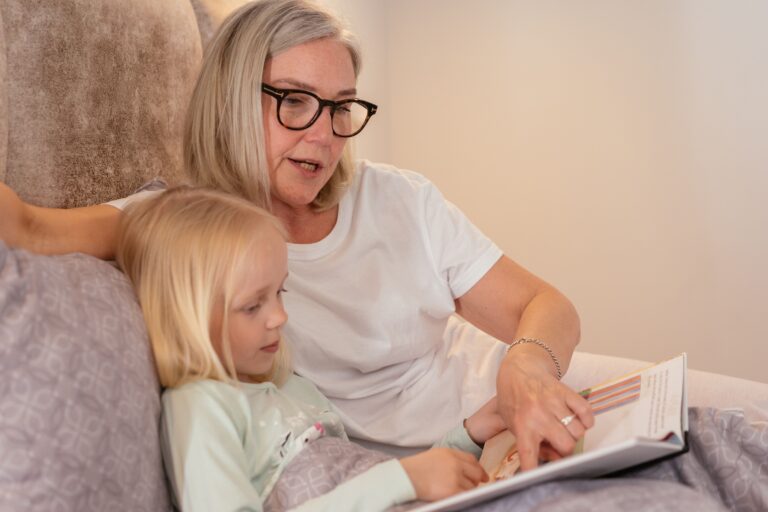
It turns out that regularly lending a hand to other people, whether it’s minding the grandkids, doing a neighbour’s shopping or volunteering at a local op shop, may help protect your brain as you age. And you don’t need to do much of it to make a difference.
What the research found
Researchers at the University of Texas at Austin, led by Dr Sae Hwang Han, followed more than 31,000 adults aged 51 and over for about 20 years. They tracked how much time each person spent helping others and how their memory and thinking skills changed over the years.
The results, published in the journal Social Science & Medicine, were striking. People who started helping others, and kept it up, showed a slower rate of age-related cognitive decline. Among regular helpers, that decline slowed by as much as 15 to 20 per cent.
The sweet spot was surprisingly modest: around two to four hours a week. That’s roughly the length of a movie or two, spread across seven days. The researchers took into account other factors that affect brain health, such as wealth, education and physical and mental health, and the link still held.
Perhaps most encouraging of all, the benefits grew over time. “What stood out to me was that the cognitive benefits of helping others weren’t just short-term boosts but cumulative over time with sustained engagement,” Han says.
The reverse was true, too. “Our data show that completely withdrawing from helping is associated with worse cognitive function,” he says.
Everyday favours count just as much
The study looked at two kinds of helping. The first was formal volunteering, the kind you do through a charity, sports club, school or community group. The second was informal helping: the everyday favours we do for friends, relatives and neighbours who live outside our own home.
Plenty of earlier research had already linked formal volunteering to better health. Informal helping, on the other hand, had largely been ignored, even though it’s far more common. “Informal helping is sometimes assumed to offer fewer health benefits due to its lack of social recognition,” Han says.
That assumption turned out to be wrong. Both kinds of helping were linked to better brain function and slower decline. “It was a pleasant surprise to find that it provides cognitive benefits comparable to formal volunteering,” Han says.
That’s great news if you don’t have the time, transport or energy to commit to a regular volunteering roster. Dropping a meal round to a friend who’s unwell, or popping in to check on an older neighbour, counts too.
Why helping is good for your brain
Helping someone out is rarely a mindless task. You plan, solve small problems, chat, adapt and often pick up something new along the way. That mix of mental effort and social contact gives your brain a genuine workout, far richer than tapping away at a puzzle on your own.
It also keeps you connected. Social isolation is one of 14 risk factors identified by the 2024 Lancet Commission on dementia, which concluded that almost half of all dementia cases could, in theory, be prevented or delayed by tackling those risks throughout life. Helping others is a natural way to stay in touch with people and feel part of a community.
Then there’s the stress factor. In another study, Han and his colleagues found that volunteering helped buffer the harmful effects of long-term stress on inflammation in the body, a known pathway linked to cognitive decline and dementia.
And let’s not forget the warm glow. Feeling useful and needed gives life a sense of purpose, which matters at every age. As Han puts it, “Everyday acts of support, whether organised or personal, can have lasting cognitive impact.”
Easy ways to clock up your two hours
The best part? Your two to four hours don’t have to happen all at once. Half an hour here and an hour there soon adds up. Here are some simple ideas:
- Mind the kids: look after grandchildren, nieces and nephews, or give a friend a child-free afternoon
- Run an errand: collect a prescription, do the shopping for a neighbour or drop someone at a medical appointment
- Lend a hand at home: mow a lawn, weed a garden bed, help a mate move house or fix that dripping tap
- Cook for someone: take a casserole to a friend who’s unwell or new parents, or organise a meal roster
- Share what you know: help someone set up their new phone, read with a child or pass on your work skills to someone starting out
- Be there: have a cuppa with someone who lives alone, give a friend a call or simply listen
- Join in locally: lend a hand at a community garden, op shop, sports club, school canteen or Men’s Shed
The bottom line
Keeping your brain sharp doesn’t have to mean another app or another pill. A few hours a week spent looking out for the people around you may be one of the simplest, most rewarding things you can do for your mind. And the people you help will be grateful, too.
Discover 22 touching stories of kindness from strangers that’ll make you tear up.