
Coffee sweetener alternatives worth considering

A spoonful of sugar in your morning brew may not be as bad for your health as you think. Though sugar often gets a bad rap, registered dietitian Andy DeSantis says that a bit of sugar in your coffee is likely fine – so long as you’re not over-consuming the sweetener during the rest of your day. “If you’re using a small amount in the morning,” he says, “your tastes should dictate your choice more than anything else.”
But what if you’re somebody who dumps six tablespoons of sugar into each cup of joe, or reaches for a bag of candy each afternoon? Diabetes experts recommend adults limit their sugar intake to less than 10 per cent of their total daily calories – approximately 50 grams (12 teaspoons) of sugar per day, based on a 2000-calorie diet. Meanwhile, it’s estimated that most Canadians consume more than twice that amount, at 110 grams of sugar per day.
“At the end of the day, sugar does not have any health benefits,” says registered dietitian and nutritionist Stefanie Senior. “When you’re consuming sugar on a regular basis, depending on how much that is, it can be a health risk.” Cutting sugar from your morning (or afternoon) coffee can be an easy way to lower your sugar intake – or simply experiment with new flavours. Here are 10 tasty coffee sweetener alternatives worth considering.
Stevia
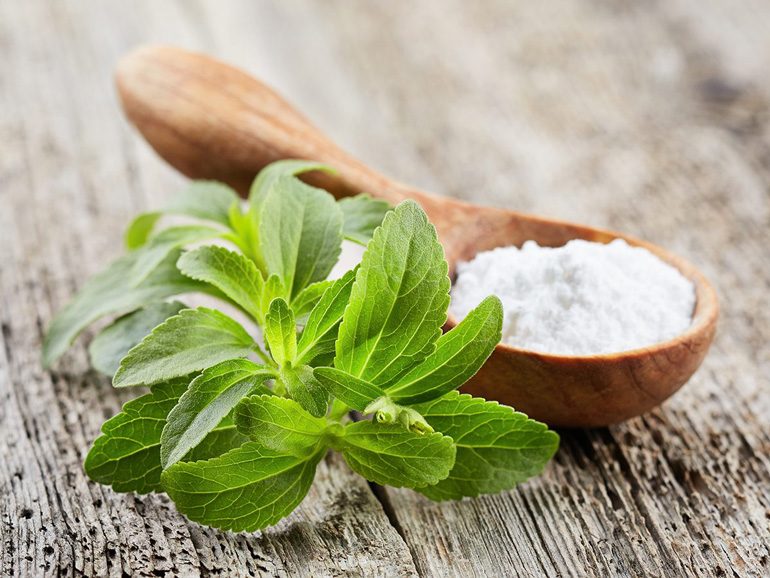
Stevia is a zero-calorie, zero-carb sweetener extracted from the leaves of the stevia plant. While some people find stevia tastes bitter, it’s actually 100 to 300 times sweeter than sugar – allowing you to use less of it and get the same coffee sweetener kick, says De Santis. Stevia may also help support healthy blood sugar levels. A 2024 review of clinical studies found that it may modestly lower blood glucose, particularly in people with diabetes, although more research is needed to confirm its long-term effects. Unlike sugar, stevia also doesn’t feed the bacteria that cause tooth decay, and some studies suggest it may even help inhibit cavity-causing bacteria. Your dentist—and your smile—will thank you!
Find out 14 foods that are worse for your teeth than lollies.
Agave

Derived from the blue agave plant, agave nectar is a thin, honey-like syrup with a lower glycaemic index than table sugar, meaning it generally causes a smaller rise in blood glucose. However, because it is naturally high in fructose, experts recommend enjoying it in moderation. Like other added sugars, agave nectar should still count towards your daily limit, but it can be a suitable alternative for those looking for a sweetener with less impact on short-term blood sugar levels.