

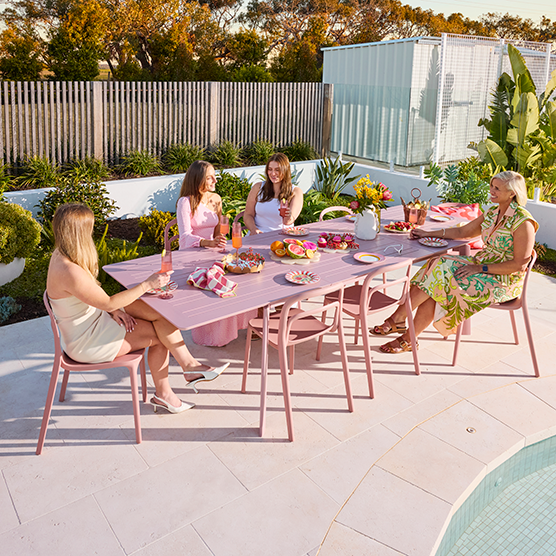
Choosing an outdoor dining table often starts with a look you like and ends with a maths problem. The table arrives, the guests arrive, and two of them end up on the back step. Seat count is the part most people work out last, when it belongs first.
Australians’ spending on furniture and homewares rose 2.7% in the year to June 2025, according to the ABS. Early Settler, an Australian furniture retailer, has designed outdoor dining furniture in Melbourne since 1985 and sells it in several sizes. The right size for your space depends on more than your headcount.
Table length sets your seat count
Table length is the fastest way to work out how many people you can seat. Allow around 60 centimetres of table edge per person. A 1.8 metre table comfortably seats six, while a 2.4 metre table expands to eight. This instantly narrows down which outdoor dining tables will fit your lifestyle
Don’t forget the ends. A rectangular table can also seat a diner at each short end, if legroom allows and no wide apron sits underneath. That adds two seats to the count.
Shape decides how many people fit
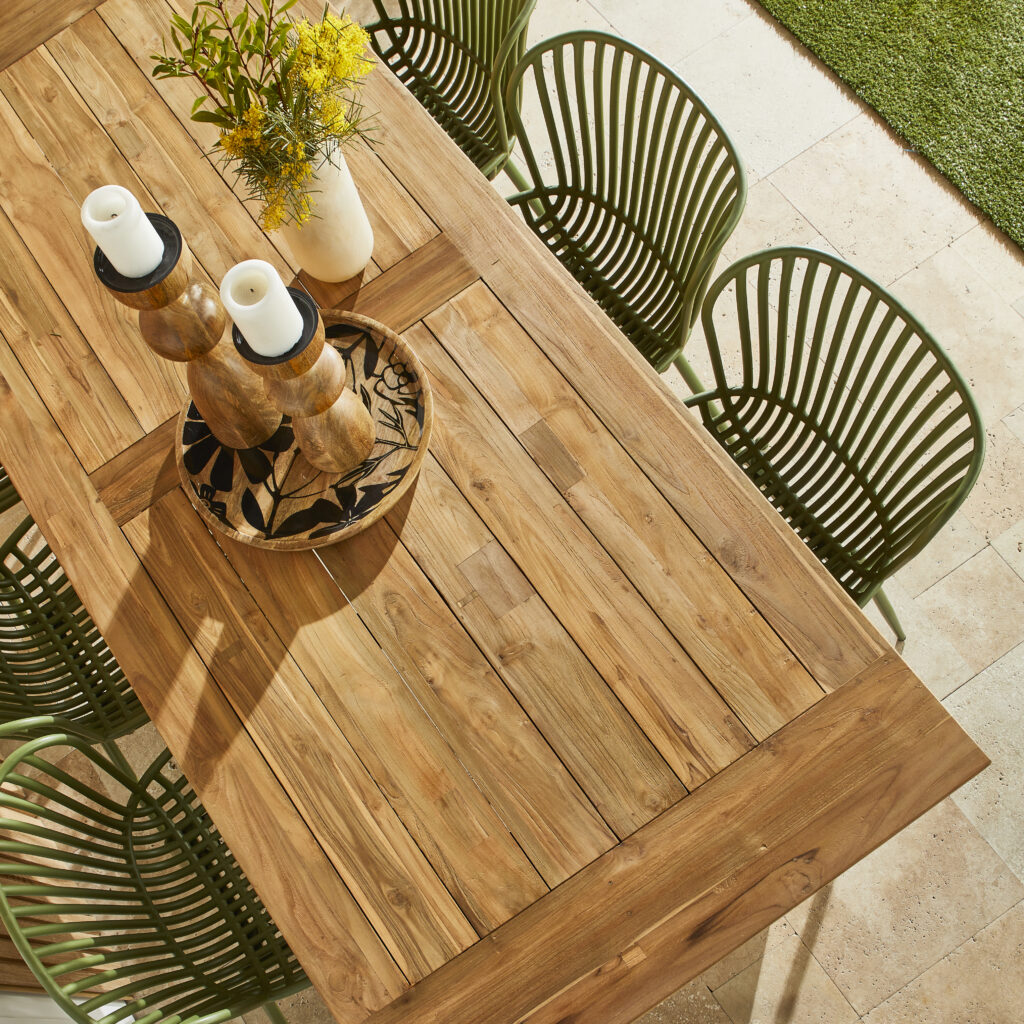
Shape decides how efficiently those seats sit around the table. Round and square tables suit small patios and balconies because chairs tuck in on every side and guests can pass through the corners easily. Rectangular tables seat more along their length, so larger groups usually want one.
Height matters as much as footprint. Standard outdoor tables sit between 72 and 77 centimetres, which suits most dining chairs without cramping knees. Leave a clear path to the door and the barbecue so nobody edges past a full chair.
Your hosting habits set the table size
Buy the table for the dinners you host most weeks. If that is usually six, a 1.8 metre table covers it without crowding. A rare gathering of ten is easier to solve with a few spare chairs than with a table that sits half empty most weeks.
Benches and extra chairs add seats
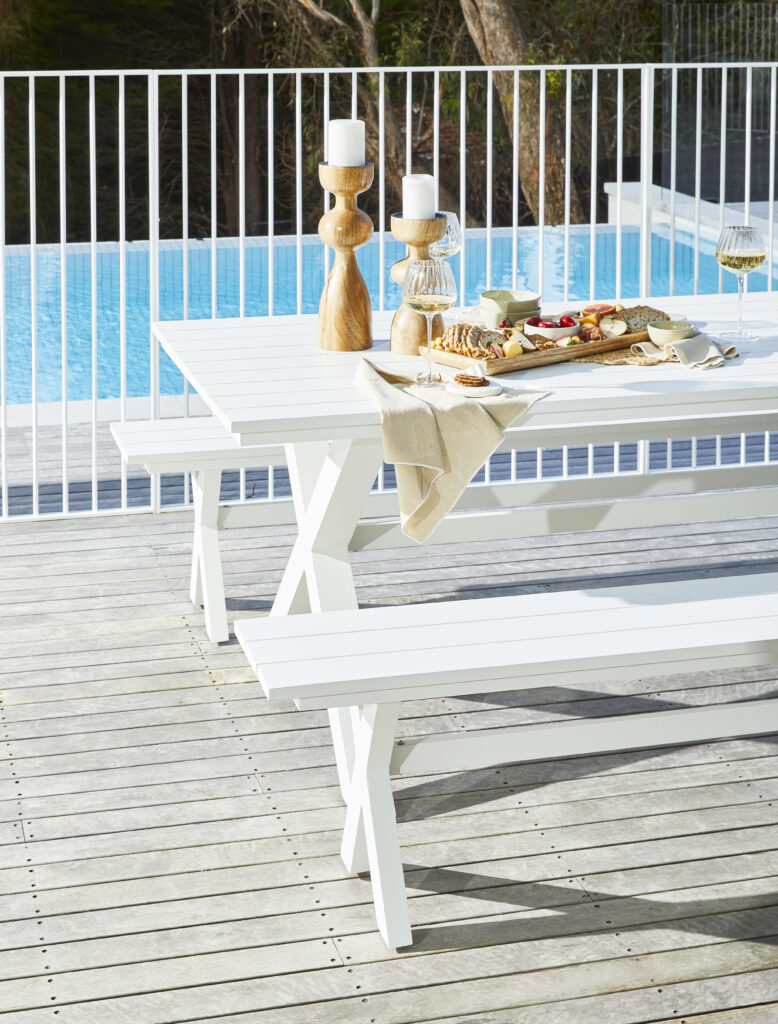
Benches are the quiet fix for seating more people without a longer table. A bench slides two or three extra diners along one edge, where separate chairs need more elbow room. The gain comes from losing the gaps that armrests and chair legs leave, so a bench often fits one more person per side.
Early Settler stocks outdoor dining benches alongside their tables, so extra diners sit along a table’s length instead of around its sides. Adding a few outdoor dining chairs to a bench also seats a crowd on busy nights and fewer on quiet ones.
Chair choice changes the final count
Chairs make or break the seat count once you set the table length. A chair with armrests needs more width per person, which can quietly drop a six-seater to four. Leave about 90 centimetres of clearance behind each chair so people can pull out and stand without a scrape.
Stackable and folding chairs earn their place here, too. They let you keep spare seats in the shed and bring them out as the numbers climb. Households that host a big group only occasionally get the flexibility without a permanently oversized table.
The right size starts before you buy
Seat count is a space decision as much as a headcount. Get the length, shape and clearance right, and one table seats a big group one weekend and fewer the next without crowding the patio.
Designed in their Melbourne studio, Early Settler’s outdoor furniture comes in durable teak, aluminium and steel finishes. Viewing these materials and sizes in an Australian or New Zealand showroom can help you judge the spatial fit before committing.
Brought to you by Early Settler