

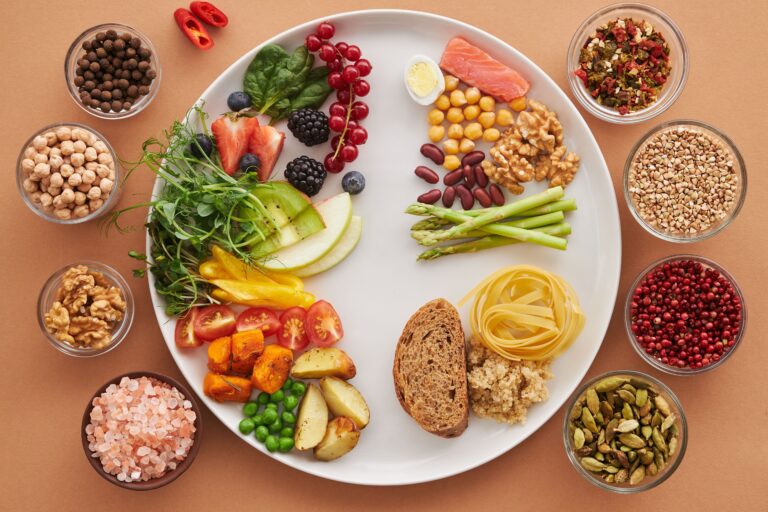
Weight loss doesn’t have to be complicated. These ten simple swaps, each backed by solid research, can make eating a little less feel much easier. Most diet advice asks you to become a different person. These don’t. They’re small adjustments to what you already do: the order you put food on the plate, the time of day you eat most of it, what’s in your glass.
1. Ask what the craving is actually for
Hunger is a signal. So are boredom, stress and the strong desire not to start the task you’re avoiding and they all turn up in the same costume.
Boredom has been tested directly. In one set of studies, bored people ate more kilojoules, fat and sugar, and reached straight past the healthy options. Here’s the giveaway: given the choice, they also went for interesting healthy food. What they wanted was stimulation, not lunch.
So at the fridge door, ask the honest question — hungry, bored, or avoiding something? Then give yourself ten minutes, and spend them on something absorbing. In one study, people who played three minutes of Tetris when a craving hit rated it about a fifth weaker afterwards. Cravings run on vivid mental pictures of food, and a task that hijacks your visual attention crowds those pictures out. Scrolling won’t do it. A puzzle, a walk, or the first two minutes of the thing you were procrastinating on will.
2. Front-load your day
You’ve probably read that an earlier lunch means faster weight loss. That traces to one Spanish study of 420 people on a 20-week program: those eating lunch after 3pm lost significantly less, and more slowly, despite similar kilojoules, activity and sleep.
But nobody was assigned a lunch hour, and in Spain lunch is the main event – roughly 40% of the day’s food. “Lunch after 3pm” there means most of your eating lands late, which isn’t the same as a 1.30 sandwich at your desk. Pool 29 randomised trials and shifting kilojoules earlier is worth about 1.75kg of extra loss: real, but modest. And when 139 adults were held to one energy target for a year, confining half of them to an 8am–4pm window made no difference at all to the scales.
So don’t set an alarm for lunch. Aim for a decent breakfast, a substantial lunch and a lighter, earlier dinner – it makes eating less feel easier, and that’s where the benefit lives. (And if you’ve been told skipping breakfast slows your metabolism, let it go. Across ten trials, the difference came to 0.17kg.)
3. Don’t bank your kilojoules for one big meal
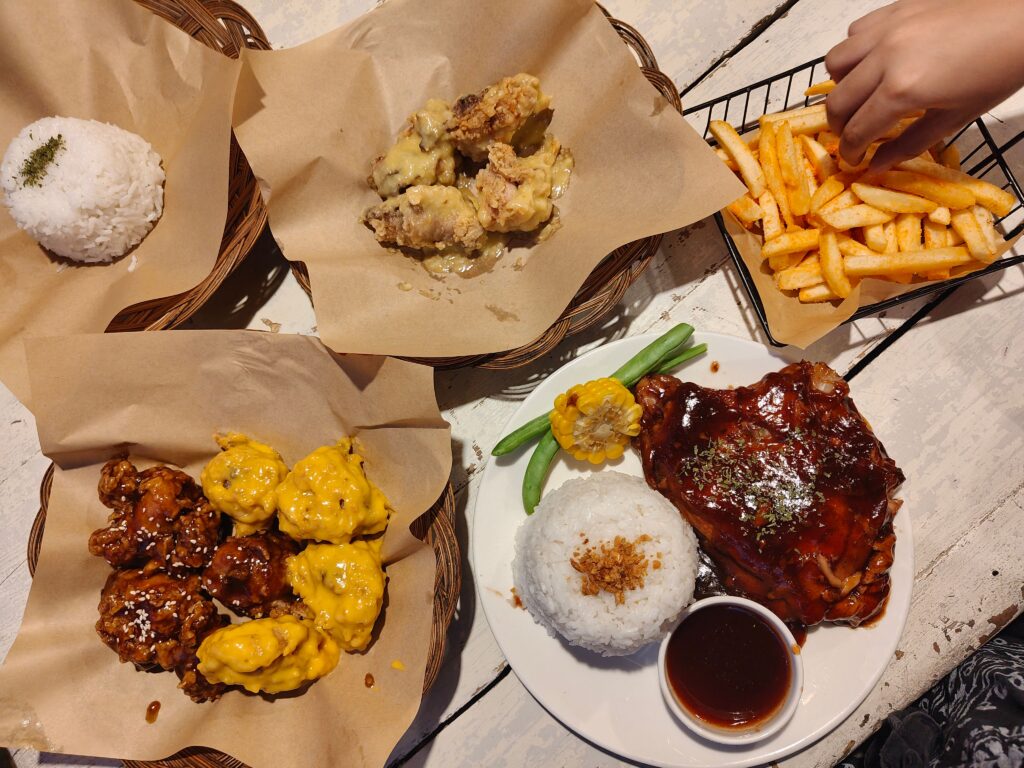
Plenty of us eat lightly all day to save room for dinner. The usual warning is that you’ll arrive ravenous and overeat — which isn’t quite what happens. When scientists tracked more than 23,000 adults, meal-skippers did eat more at the next meal, but nowhere near enough to catch up; their daily total actually fell. What fell with it was the quality of what they ate.
The real problem shows up over years: in a six-year study of 1,245 adults, those eating 48% or more of their daily kilojoules at dinner had more than double the odds of becoming obese.
Heading into a big meal? A protein-rich snack about two hours beforehand really does help. In one trial, an afternoon high-protein yoghurt left women less hungry, delayed dinner by around 30 minutes and cut what they ate at it by roughly 400 kilojoules, compared with a same-sized chocolate snack. The snack’s own kilojoules still count, mind — this takes the edge off a big meal, it doesn’t cancel it.
4. Build breakfast around protein — and be honest about the amount
A protein-forward breakfast steadies blood sugar: across 25 randomised trials, shifting breakfast away from refined carbohydrate improved both post-meal glucose and longer-term readings — as much because of what the protein displaces as the protein itself.
More interesting, if you’re trying to eat less: when habitual breakfast-skippers were given a 1,500-kilojoule breakfast containing 35g of protein, they snacked less on fatty, sugary food that evening than after a same-sized cereal breakfast or none at all — and brain scans before dinner showed quieter activity in the regions driving cravings.
The catch is the dose. Thirty-five grams is more than most breakfasts deliver: two to three eggs gets you roughly 13–19g, a tub of Greek yoghurt about 17g, a cup of cottage cheese around 25g. Any of them beats toast and jam — but for the craving effect, combine two rather than hoping one will carry the morning.
5. Put the vegetables on the plate first
Starting with vegetables is good advice, though not for the usual reason. When 46 women were served a low-kilojoule salad either 20 minutes before their pasta or alongside it, the salad trimmed about 11% off the meal — but the timing made no difference to that. What serving it first did do was get people to eat 23% more vegetables.
That’s the mechanism: front-load them and more get eaten, and every forkful of something water-rich and fibrous is a forkful of something denser you didn’t have.
One catch: piling vegetables on top of what you already eat won’t shift the scales. Trials that increased fruit and veg without changing anything else found no weight effect at all. Vegetables help by replacing, not by joining in.
6. Dress the salad — but dress it properly
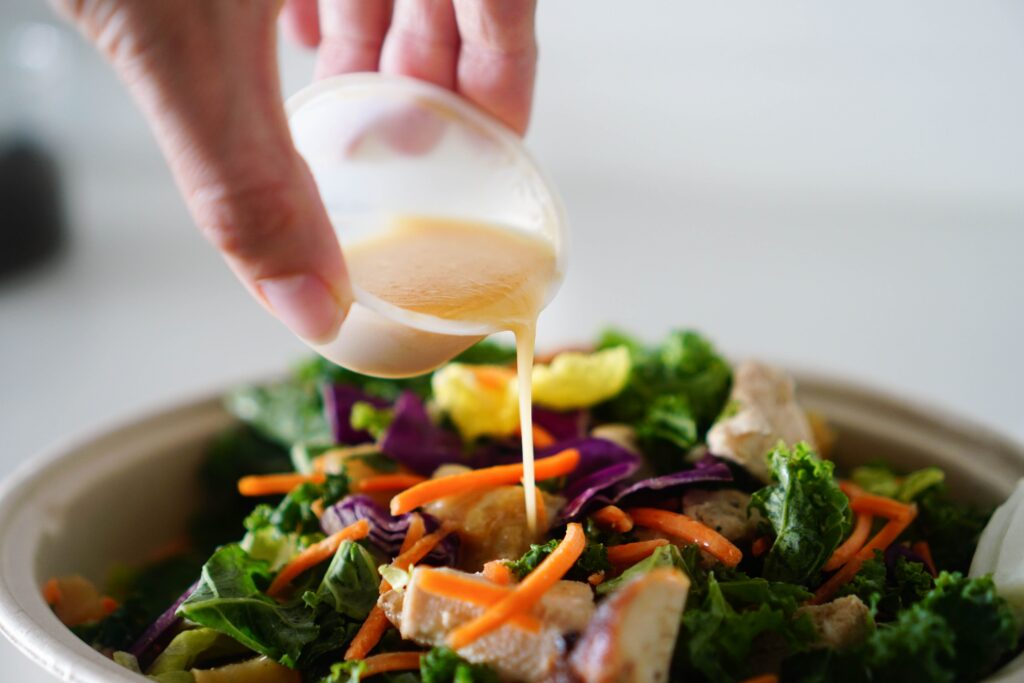
In one study, a light starter salad cut a pasta lunch by 7–12%, while the same salad loaded with dressing and cheese pushed the meal up by 8–17%. At a decent serving, that’s a 400-kilojoule salad versus a 1,600-kilojoule one, from the same bowl of vegetables.
But the fix isn’t the fat-free bottle. When people ate identical salads with dressings containing no fat, a little, or a lot, absorption of carotenoids — the beta-carotene and lycopene the vegetables are there for — was essentially nil with the fat-free version and rose steadily with the fat content. Fat-free dressing turns a nutritious salad into expensive roughage.
The middle ground comes from a follow-up study: monounsaturated oils such as olive and canola delivered the same nutrient absorption at three grams of fat as at twenty. A spoonful of olive oil and something acidic beats both the fat-free bottle and a generous pour of ranch.
7. Pay attention while you eat — especially to what you’ll eat next
Eating mindfully means noticing what you’re eating, how much, and why you reached for it. It isn’t a weight-loss trick in its own right: in a six-month trial of 138 women with obesity, adding mindfulness to a reduced-kilojoule diet produced no more loss than the diet alone. What it does improve is emotional and impulsive eating — the harder habit to shift anyway.
The related advice — phone down, telly off, eat at a table rather than your desk — has better evidence than most diet tips, though not in the way it’s sold. Across 50 experiments, distraction has only a small effect on how much you eat during the meal. The cost shows up afterwards: distracted eaters consistently eat more at the next one, because a meal you barely registered doesn’t quite count against your appetite later.
8. Swap rather than restrict
Identical kilojoules don’t behave identically. In a trial where 20 adults lived in a research facility for a month, two diets were matched for energy, sugar, fat, fibre and salt — the only difference was how processed the food was. Eating freely, people took in about 2,000 extra kilojoules a day on the ultra-processed version and gained 0.9kg in a fortnight, then lost it again on the whole-food one.
Even the label arithmetic is approximate: the body extracts about 129 calories from 30g of almonds, not the 168 the formula predicts, because much of the nut passes straight through.
Which is why swapping beats white-knuckling smaller portions of the same food. The largest study of this followed nearly 121,000 adults for up to two decades: each daily serve of potato chips was worth about 0.8kg of gain per four years and each sugary drink about 0.45kg, while yoghurt tracked with 0.35kg lost and nuts 0.3kg. You don’t have to eat less of everything — just change a few of the things you eat most often.
9. Watch what you drink
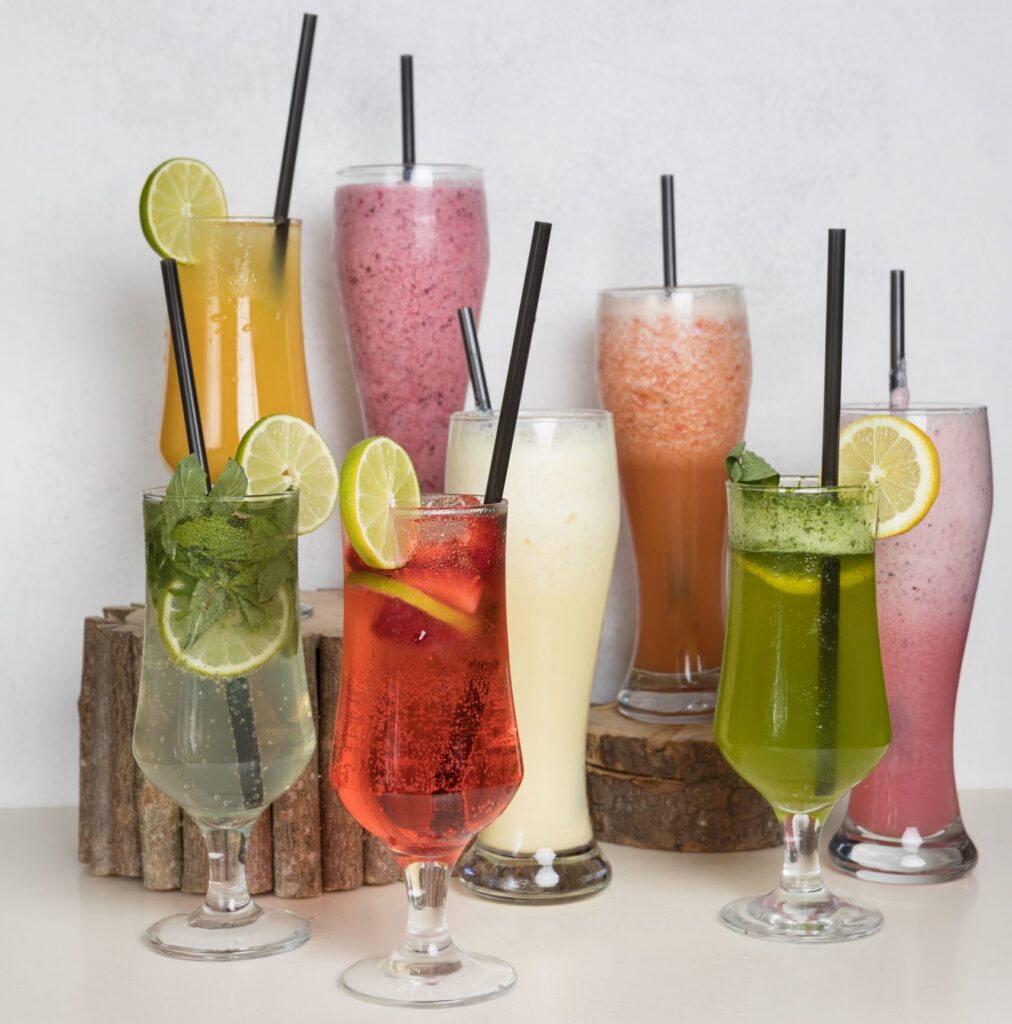
Kilojoules you drink don’t register the way kilojoules you chew do. You simply don’t eat less later to make up for them.
The evidence on soft drink is about as strong as nutrition research gets: pooling nearly 450,000 adults and 16 randomised trials, each daily serve tracked with 0.42kg more body weight, and cutting them out produced about half a kilo of loss. Energy drinks are the same thing in a different can. Juice is the gentler version — a 2024 review of 42 studies linked each daily serve of 100% juice to a small rise in BMI. A glass of orange juice is roughly three oranges drunk in two minutes, minus the fibre that would have slowed you down.
Water’s own reputation is a little inflated. One well-known trial found 500ml before meals helped older dieters lose 5.4kg against the control group’s 3.3kg — but pool all the trials and the effect is indistinguishable from zero. What works is substitution: water in place of something sugary is worth around 0.8kg.
Alcohol works differently again: across a dozen experiments, people who drank went on to eat more, not less, adding roughly 1,000kJ to the day. But the stronger case for cutting back isn’t about your waistline. A 2025 US Surgeon General’s advisory attributed close to 100,000 cancer cases a year to alcohol across seven cancer types, and noted the risk is present even within official drinking guidelines. Australia’s advice is no more than 10 standard drinks a week and four in a day — less is better.
10. Cook at home more — and cheat where you can
This is less about virtue than arithmetic. When researchers measured the energy in 157 restaurant meals, the average came to 5,550 kilojoules — 73% held more than half a day’s food, and a dozen exceeded a full day in one sitting. Italian averaged over 7,300kJ. And the local independent place was no better than the big chains, which rather undercuts the usual assumption.
In a UK study of more than 11,000 adults, people eating home-cooked meals more than five times a week ate almost 100g more vegetables a day and were 28% less likely to be in the overweight BMI range. Cooking doesn’t make food healthy on its own — it just puts you, rather than a kitchen you’ll never see, in charge of the portion and the oil.
And if what’s stopping you is the chopping, pay to remove the chopping. When school canteens served apples sliced rather than whole, children ate nearly two and a half times more by weight, and the share eaten rather than binned rose from about 30% to 75%. Same fruit, same children — the only thing removed was effort. (The nutrient worry doesn’t hold up: cut fruit looks past its best long before it loses anything meaningful.) If the sticking point is money rather than time, though, this is the wrong fix — try frozen vegetables instead. No preparation, no spoilage clock, and nutritionally on par with fresh, as long as there’s no added salt or sugar.